What Are BNPL Services? How Buy Now Pay Later Works
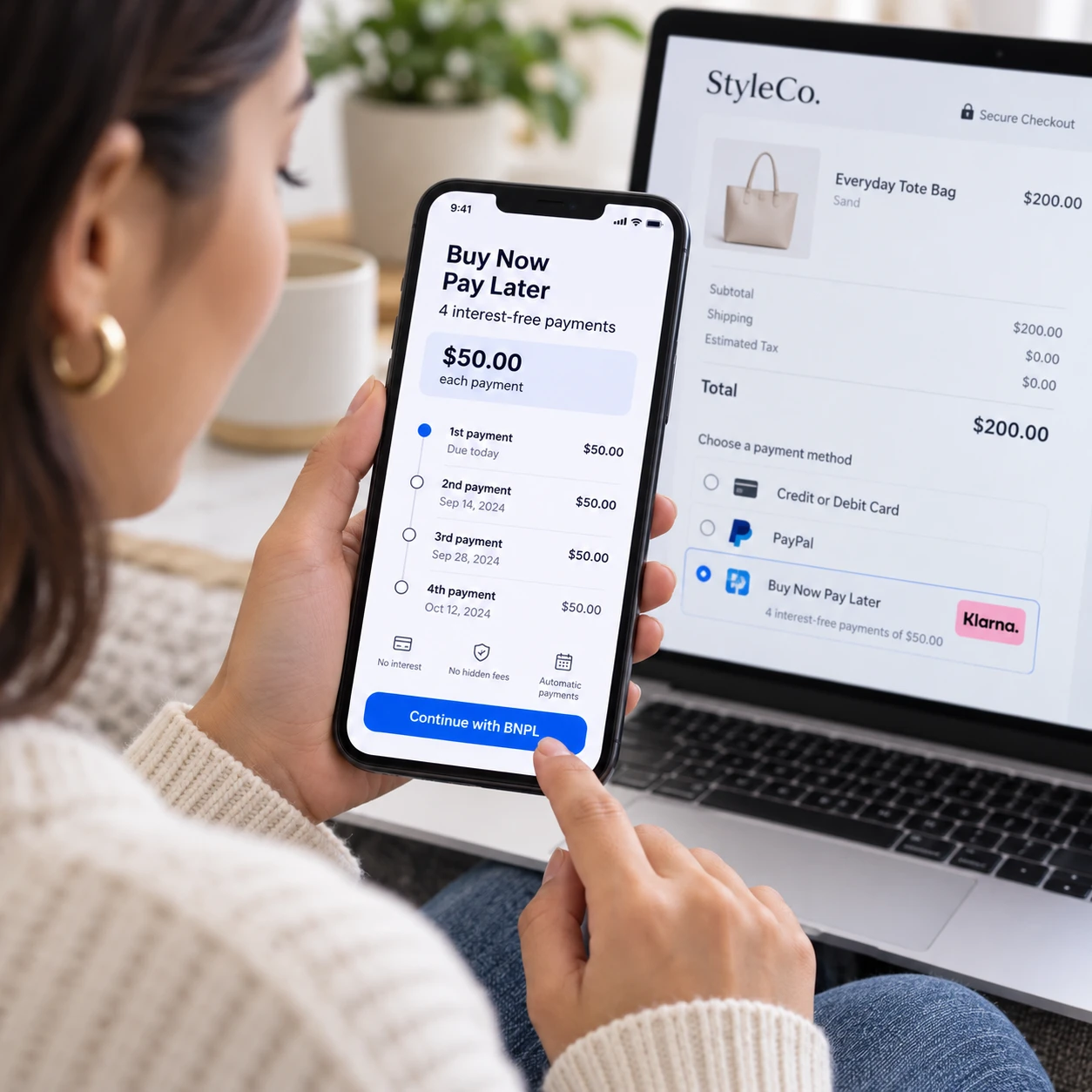
Buy Now Pay Later, usually shortened to BNPL, lets shoppers split a purchase into installments instead of paying the full amount at checkout. It can make a planned expense easier to spread across paydays, but the payment schedule, fees, and credit effects depend on the BNPL provider and plan.
Before selecting BNPL at an online or in-store checkout, look beyond the first installment. You are agreeing to repay the full purchase under specific terms, and missed payments or overlapping plans can create real financial pressure.
What does Buy Now Pay Later mean?
Buy Now Pay Later is a payment option that divides a purchase into scheduled installments. A BNPL provider typically pays the merchant, while you repay the provider according to the plan’s terms.
BNPL is a form of point-of-sale financing: the financing offer appears where you buy something, rather than requiring you to arrange a separate loan in advance. Some plans divide a purchase into a few short-term payments; others may offer longer repayment periods. The provider, purchase, and location all affect what is available.
At checkout, the displayed first payment may be only part of the cost. The rest remains an obligation, even if the purchase has already arrived or been used. BNPL can be offered by a specialist company, a bank, or a payment platform, and each may set different eligibility rules and protections.
That variation matters. “Pay in four” or “interest-free” describes certain offers, not every BNPL product. Read the agreement for the total amount due, payment dates, fees, and what happens if you return an item or miss a payment.
How do BNPL services work?
To use a BNPL service, choose it at checkout, review the offer, complete any approval step, and repay the installments on their due dates. The provider’s checkout screen or agreement should show the schedule and applicable charges before you confirm.
- Select BNPL: Choose the provider at checkout, either online or at a participating store.
- Review and apply: Enter the requested details and review the offer. The provider may perform a credit check or use other information to assess eligibility; the process varies.
- Confirm the plan: Check the total purchase amount, installment amounts, payment dates, and any interest or fees before accepting.
- Make repayments: Payments may be taken automatically from a linked debit card, credit card, or bank account, or made manually, depending on the service.
Approval is not guaranteed, and an approval decision should not be treated as a judgment about whether the purchase fits your budget. Set reminders if payments are not automatic, and make sure the linked account will have enough funds on each due date. A failed automatic payment may trigger a fee or other consequences under the provider’s terms.
Returns can also take time to process. Contact the merchant and follow the provider’s return or dispute instructions; do not assume that sending an item back automatically cancels upcoming installments. Check whether payments remain due while a return or dispute is being reviewed.
What types of BNPL plans are available?
BNPL plans commonly include short-term, fixed installment payments or longer point-of-sale financing. The number of payments, repayment period, interest, and fees vary, so compare the specific offer rather than relying on a plan’s label.
A short-term plan might split a purchase into four payments over a few weeks, often with the first payment due at checkout. Other short-term plans use a different number of installments or schedule. Some providers also offer longer monthly financing, which may charge interest or have separate eligibility requirements.
The practical difference is the time and total cost of repayment. A shorter plan can clear the balance quickly, but its installments may be larger or fall close together. A longer plan can reduce each payment while keeping the debt active for more months and potentially increasing the total cost if interest applies.
To compare plans, write down three figures: the total repayment amount, each payment’s due date, and the charge for paying late or missing a payment. If any of these are unclear before checkout, ask the provider or choose another payment method.
BNPL vs. credit cards: What’s the difference?
The main difference is that BNPL usually finances a specific purchase under a set installment schedule, while a credit card provides a reusable credit line. Repayment, fees, credit checks, and reporting can differ by provider, card, and jurisdiction.
| Feature | BNPL | Credit card |
|---|---|---|
| How you borrow | Often tied to one purchase and one plan | Reusable credit line for eligible purchases |
| Repayment | Set installments with scheduled dates | Monthly statement; minimum payment is generally due, with interest possible on carried balances |
| Cost | May have no interest for some plans, but fees or interest may apply to others | Interest and fees depend on the card agreement and how you repay |
| Credit checks and reporting | Provider practices vary | Issuers commonly review credit applications; account reporting depends on the issuer and market |
A credit card may offer a grace period or dispute rights under its agreement and applicable law, while BNPL protections and processes can differ. Neither option is automatically cheaper or safer. Compare the actual repayment terms, and check how the provider handles returns, billing errors, and complaints.
Benefits and risks of using BNPL
BNPL can spread the cost of a purchase, but it can also make spending harder to track and leave you with several payments due at once. Its usefulness depends on whether the installments fit your budget and whether you can meet them on time.
For a planned purchase, a clear payment schedule may help you coordinate cash flow. Some consumers also value a fast checkout and the ability to pay in installments without using a traditional credit card. Those conveniences do not reduce the amount owed.
The risks often come from stacking plans. Three separate purchases may each look manageable at checkout, yet their due dates can cluster around the same payday. Late fees may apply, a missed payment could restrict access to the service, and some providers may report certain account activity to credit bureaus or use other collection processes. Credit reporting is provider- and product-specific; confirm the policy rather than assuming BNPL has no effect on credit.
Consumer protection can also depend on the provider, the type of financing, and local rules. Keep order confirmations, payment records, and return communications. If a merchant fails to resolve a problem, follow the BNPL provider’s stated dispute process and check which consumer protection agencies or rules apply where you live.
A useful check is to treat every plan like a bill: list the remaining balance and due dates alongside rent, utilities, and other commitments. If you cannot comfortably cover the installments without relying on another loan or new BNPL plan, reconsider the purchase.
What to check before choosing a BNPL service
Before choosing a BNPL service, confirm the full repayment amount, payment dates, fees, return process, dispute route, and credit-reporting policy. These details tell you what the offer will actually cost and what to expect if something goes wrong.
- Payment schedule: Note every due date and installment, including the amount charged at checkout.
- Fees and interest: Check late fees, returned-payment fees, interest, and any conditions for promotional terms.
- Credit checks: Find out whether applying involves a credit check and whether the provider explains its effect.
- Credit reporting: Ask whether on-time or missed payments may be reported, and to which credit bureaus where applicable.
- Returns and disputes: Learn how refunds affect the balance, whether payments continue during a review, and how to challenge an incorrect charge.
- Provider terms: Read the agreement and privacy details, and confirm how the provider handles missed payments or collections.
Read the terms before tapping “confirm,” not after a payment fails. If the checkout summary does not show the total cost or schedule clearly, pause and find the full agreement. A few minutes of checking can prevent a small installment from becoming a confusing series of obligations.
Frequently asked questions about BNPL
BNPL costs and consequences depend on the plan and provider. Check the agreement for answers specific to your purchase, because providers do not all use the same terms.
Do BNPL services charge interest or fees?
Some short-term plans may charge no interest when payments are made as agreed, but that is not universal. Other plans may charge interest, and late or failed payments may lead to fees. Check the total amount due and fee schedule before accepting an offer.
Can using BNPL affect your credit?
It can, depending on the provider, product, and local reporting practices. A provider may conduct a credit check or report account activity, while another may handle it differently. Review the terms or ask the provider directly.
What happens if you miss a BNPL payment?
The provider may retry the payment, charge a fee if its terms allow, restrict future use, or take further collection steps. The exact consequences vary. Contact the provider promptly if you expect trouble paying, and check whether the missed payment could be reported.
Is BNPL different from a credit card?
Yes. BNPL is commonly arranged as installments for a specific purchase, while a credit card offers a reusable credit line with monthly billing. Fees, interest, credit reporting, and consumer protections depend on the particular product and applicable rules.