Comparing Fees: Traditional Banks vs. Neobanks
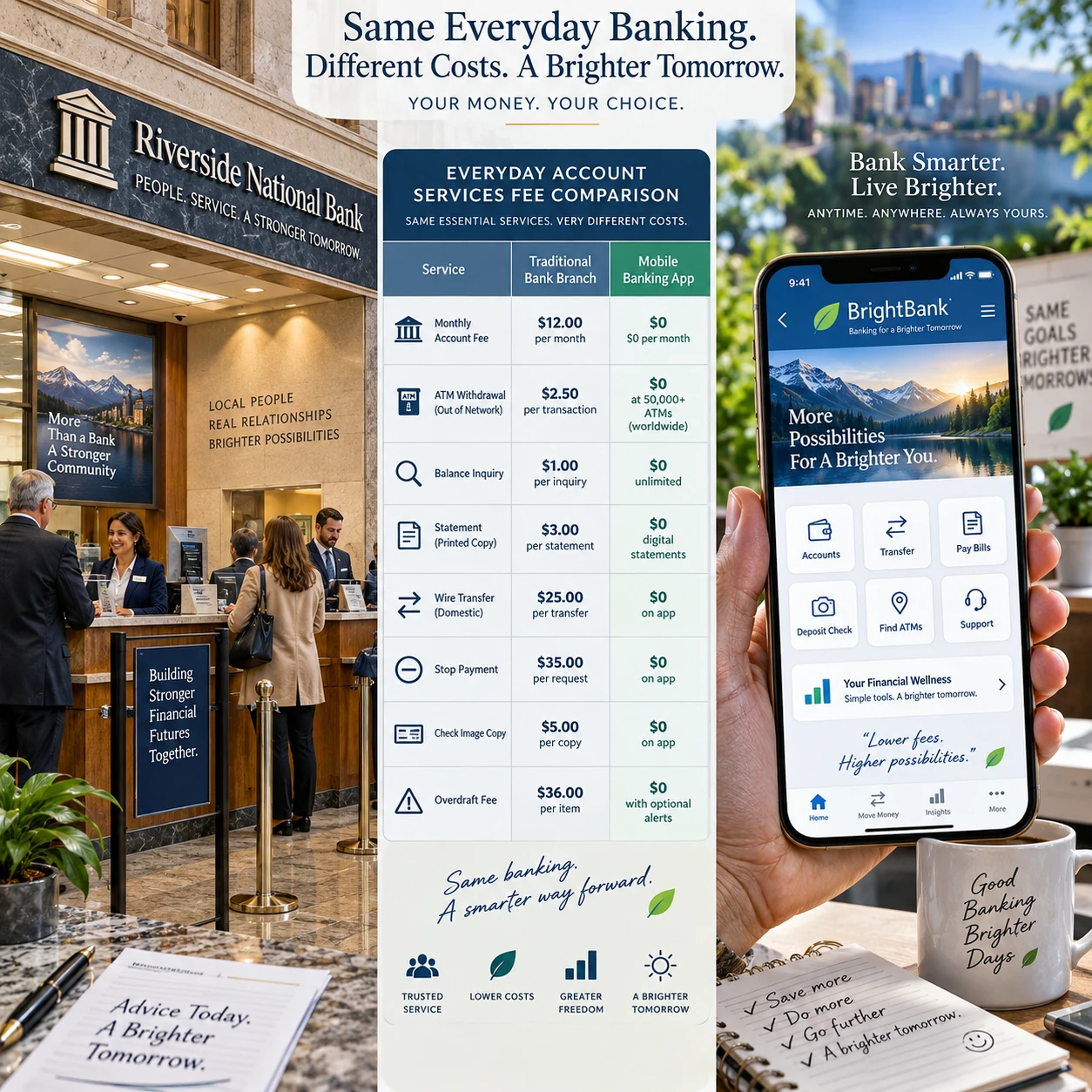
Bank fees can be easy to overlook when you focus on an account’s headline benefits. A monthly maintenance charge, out-of-network ATM withdrawal, or occasional wire transfer can change what an account actually costs over a year.
Traditional banks and neobanks may charge for the same services, but their pricing, access, and waiver rules can differ. The fairest comparison is based on your own banking habits and the provider’s current fee schedule and account terms, not on assumptions about either type of institution.
Why banking fees differ by provider
Banking fees differ because traditional banks and neobanks operate different service models, and each account sets its own terms. A provider’s branch network, customer support, ATM access, and account features can all affect which services cost money.
Traditional banks typically maintain physical branches alongside online and mobile banking. Those services may come with account requirements such as a minimum balance or qualifying direct deposit to avoid a monthly maintenance fee. Neobanks generally focus on digital account access and may have fewer overhead costs, but that does not guarantee every service is free.
It also matters what a provider means by a neobank. Some operate through a partner bank that holds deposits and provides underlying banking services. Review the account terms to identify the provider, how the account works, and which company handles particular services or charges.
Think of the price as a combination of the account’s regular charge and the fees triggered by how you use it. A low monthly fee may not help much if you regularly withdraw cash from unsupported ATMs or send international transfers. Conversely, an account with a maintenance fee could still be a better fit if it includes services you use often.
Common fees at traditional banks
Traditional banks may charge monthly maintenance, ATM, overdraft, foreign transaction, and wire transfer fees, but amounts and waiver rules vary by institution and account. Check the specific account’s fee schedule rather than assuming all accounts at one bank have the same pricing.
Monthly maintenance fees may be waived when you meet conditions, such as keeping a minimum balance, receiving a qualifying deposit, or linking eligible accounts. These requirements can be manageable, but a waiver tied to a balance may not suit someone who keeps only a small amount in checking.
ATM fees can apply when you use an ATM outside the bank’s network. In some cases, the ATM owner also charges a separate fee. A bank may reimburse some out-of-network charges, but check whether reimbursements are unlimited, capped, or restricted to certain machines.
Overdraft fees and returned-payment charges depend on the account’s terms and the bank’s policies. An account may offer overdraft coverage or a linked-account transfer, but those features can have conditions or costs. Read how the bank handles transactions when your balance is too low.
Foreign transaction fees may apply to card purchases processed in another currency or country. Wire transfer fees can vary by direction, currency, and destination. A domestic wire and an international wire may have different charges, so compare the exact service you expect to use.
Common fees at neobanks
Neobanks may offer accounts without monthly maintenance fees, but digital-first banking does not necessarily mean fee-free banking. ATM withdrawals, cash deposits, overdrafts, foreign transactions, and wires can still carry charges or limits.
A neobank may provide access to a partner ATM network at no charge while charging for withdrawals elsewhere. Some accounts do not support cash deposits directly, or they allow deposits only through participating retailers under specific conditions. If you handle cash regularly, confirm how you can add it and whether a third party charges for the service.
Overdraft features also vary. One account may decline transactions that exceed the available balance; another may offer a fee-free buffer, optional coverage, or a paid feature with eligibility rules. Do not assume that a digital account handles overdrafts in the same way as another neobank.
Foreign transaction and wire transfer costs deserve the same scrutiny as at a traditional bank. A neobank’s card might have no foreign transaction fee, while international transfers may be unavailable, routed through another service, or priced separately. Convenience is not a price: look for the actual fee, any exchange-rate markup, and service limits in the account terms.
Fee-by-fee comparison
Compare traditional banks and neobanks by matching the same fee category and the same usage scenario. For each service, identify the amount, waiver conditions, limits, and any third-party charge.
| Fee category | What to compare |
|---|---|
| Monthly maintenance | Monthly price, balance or deposit requirements, and whether the waiver is reliable for you. |
| ATM and cash access | In-network locations, out-of-network charges, reimbursements, withdrawal limits, and cash deposit options. |
| Overdraft | Whether transactions are declined, any overdraft charge, linked-account transfer costs, and eligibility rules. |
| Foreign transactions | Card purchase fee, currency conversion terms, and whether cash withdrawals abroad are priced differently. |
| Wire transfers | Domestic versus international pricing, incoming versus outgoing wires, and currency or intermediary charges. |
Use the provider’s official fee schedule for the account you are considering. For a U.S. account, the Consumer Financial Protection Bureau’s bank account resources can also help explain account fees and common terms. A comparison is only useful if both providers are being assessed on equivalent services.
How to compare total costs for your habits
To compare total banking costs, estimate how often you use each fee-triggering service and apply the account’s actual rates and limits. Include both predictable charges and occasional costs, then compare the result with any conditions required to avoid fees.
A simple yearly estimate is: monthly fees after waivers, plus ATM charges, overdraft-related costs, foreign transaction fees, and transfer fees. Add cash deposit charges if relevant. Do not count a fee as zero merely because it can be waived; count it as zero only if you can consistently meet the waiver condition.
Start with a typical month, then check a busier or less convenient month. For example, if you usually use in-network ATMs but travel a few times a year, include the out-of-network withdrawals you are likely to make. If you send a wire only once, include that charge without letting it outweigh the costs you incur every month.
Consider access as well as price. A provider with no maintenance fee may be less practical if it has no nearby cash options or if customer support is limited to channels that do not suit you. The goal is to identify the account with the lowest realistic cost for your needs, not simply the lowest advertised fee.
What to check before opening an account
Before opening an account, read its current fee schedule and account terms together. The fee schedule lists charges, while the account terms explain conditions, limits, and how services operate.
- Confirm the exact account type. A provider may offer several checking accounts with different fees, waiver rules, and features.
- Check how waivers work. Verify minimum balances, qualifying deposits, linked-account requirements, and when the provider measures them.
- Review limits and networks. Look for ATM access, withdrawal caps, cash deposit methods, and reimbursement restrictions.
- Check edge cases. Read what happens with overdrafts, returned payments, foreign purchases, incoming wires, and outgoing transfers.
- Look for third-party charges. An ATM operator, retailer, or intermediary may charge separately from the account provider.
- Save the terms you reviewed. Fees and policies can change, so keep a copy or note the date and check again before relying on a particular benefit.
A common mistake is comparing a traditional bank’s standard account with a neobank’s promotional or premium account. That can hide a waiver requirement or paid feature. Compare similar account types and include the costs of services you actually need.
FAQ
Are neobanks always cheaper than traditional banks?
No. Some neobanks have no monthly maintenance fee, but ATM, cash access, overdraft, or transfer costs can still apply. A traditional bank may offer a low-fee account or waive its monthly charge if you meet clear requirements. Compare total costs for your expected use.
Do neobanks charge ATM or cash withdrawal fees?
Some do, especially for withdrawals outside a supported ATM network. The ATM operator may charge a separate fee as well. Check network locations, withdrawal limits, and reimbursement rules; also confirm whether cash deposits are available and what they cost.
Can a traditional bank offer a low-fee account?
Yes. Some traditional banks offer accounts with no monthly maintenance fee, while others waive the charge when you meet conditions such as a qualifying deposit or minimum balance. Review the exact account terms to see whether you can meet those conditions consistently.
How can I compare fees when providers bundle services?
List the services you use and compare their standalone costs and included limits. A bundled account may be worthwhile if you regularly use the included services, but less useful if you pay for features you do not need. Include waiver requirements and over-limit charges in your estimate.